Minipuzzles Go!
- 4.6
- Rating
- 10.00K
- Installs
- Free
- Price

 Analysis by App-foxy
I like trivia games that respect a short break. Minipuzzles Go! is built around that idea: a free puzzle game from Puzztime! that combines small brain teasers with daily challenges instead of asking me to settle in for a long session. It is available for everyone by age rating, and its simple premise makes it easy to imagine on a shared household phone or tablet.
My first impression is that this is best understood as a light mental reset rather than a deep quiz platform. I can open it when I have a few spare minutes, work through a compact challenge, and put it away without feeling that I have abandoned a complicated campaign. That makes it approachable, although it also means dedicated trivia fans may eventually want more depth than this kind of bite-sized format provides.
How Minipuzzles Go! Fits Into Everyday Household Use
I’d use this section to think through how a short puzzle fits around the household’s existing routines, rather than treating it as an activity that needs a dedicated game night. A simple turn-taking plan can make a shared device feel less like a source of interruptions and more like a small invitation to think together.
You May Also Like

 AccuWeather: Weather Radar
AccuWeather Review: A Quick, Clear Forecast for Everyday Decisions
For everyday plans, the best forecast is the one you can understand quickly. AccuWeather makes rain timing, radar, and local conditions easy to act on, with a few trade-offs.

 Hill Climb Racing
Why Hill Climb Racing Still Turns Crashes Into One More Run
A tiny car, a bumpy hill and one more upgrade: Hill Climb Racing keeps resurfacing because its simple chaos makes every near-miss feel personal.

 AliExpress - Shopping App
AliExpress Makes Global Shopping Feel Personal, but Shoppers Bear the Risk
AliExpress turns a global marketplace into a pocket-sized discovery engine. Its reach is useful, its shopping loop compelling, and its trade-offs easy to miss.

 Lords Mobile: Kingdom Wars
Lords Mobile Is a Kingdom-Building Routine, Not a Quick Match
A case-by-case verdict on the building, battles, device demands, and social commitments that make Lords Mobile rewarding for some players and exhausting for others.

 PDF Scanner app - TapScanner
TapScanner Makes Paperwork Easier to Capture, Check, and Share
TapScanner makes scanning with a phone feel less like a rescue operation and more like a dependable step in getting work done. Its capture tools are useful, though not flawless.

 Block Blast!
 Shows How Much a Puzzle Game Can Leave Out
A quiet grid game shows why puzzle players increasingly value instant clarity, repeatable skill and low-pressure play—and where the genre still needs to catch up.
More From Our News Desk
View All News


A practical shared-device game for short turns
On a shared device, the most useful quality here is the small-session design. One person can take a turn while waiting for dinner, another can try a puzzle later, and the device does not need to become the center of the evening. I would use it in the same way I use a small crossword or a quick word puzzle: open it, concentrate for a little while, then hand the phone back.
That arrangement works especially well when several people have different attention spans. A child may want to try a challenge before bedtime, while an adult may prefer a quick round during a commute or coffee break. Because the game is categorized as trivia and focuses on puzzles and brain teasers, it can sit between entertainment and casual mental exercise without demanding a full competitive session.
The important household trade-off is that a shared device is not the same thing as separate player spaces. I would not assume that each person has an independent profile, progress history, or personalized challenge area. If those boundaries matter, I would treat the game as a pass-the-device activity rather than a family account system. That keeps expectations realistic and avoids confusing one person’s progress with another’s.
Why the daily rhythm matters
The daily challenge idea gives the game a natural routine. Instead of opening it only when I am bored, I can make it part of a small habit: one puzzle with breakfast, one during a quiet pause, or one shared attempt after school. The advantage is not intensity; it is consistency. A short recurring activity can be easier to maintain than a large quiz session that requires planning.
I also see a useful social angle in solving the same daily prompt together. A household can compare reasoning rather than simply comparing scores. One person may recognize a clue quickly, while another may notice a pattern that the first player missed. That makes the game suitable for conversation, particularly when the goal is to think together instead of proving who is the smartest.
Still, a daily format can create pressure for players who dislike streaks or routine-based games. If missing a day makes the experience feel less satisfying, I would avoid treating the challenge as an obligation. The healthiest way to use it is as an invitation to play, not as another task that has to be completed perfectly.
Setting up a clear boundary before handing over the device
When I let someone else use a game on my phone, I prefer to make the boundary clear first. I would open the game myself, check what screen it starts on, and explain that the device is being shared for the puzzle rather than handed over for unrestricted browsing. That is ordinary household coordination, but it matters more with younger users.
The game is free to download and play, while optional in-app purchases range from $0.99 to $11.99 per item. For a shared device, that makes a quick purchase check worthwhile before another person starts playing. I would use the device’s normal purchase protections and make sure the person playing knows that free access does not necessarily mean every optional item is free. This is not a criticism of the puzzle concept; it is simply a sensible boundary whenever a game includes paid extras.
I would also decide whether the game is being used independently or cooperatively. If one person is supposed to solve the challenge alone, other household members should avoid giving away answers. If the aim is a group activity, discussing clues openly can make it more enjoyable. Agreeing on that beforehand prevents the common shared-device problem where one player feels that someone else spoiled the puzzle.
What the age rating tells me in practice
The Everyone content rating makes the game easier to consider for a mixed-age household. I would still look at the actual puzzle content with the child who is using it, because an age label is a broad guide rather than a guarantee that every question will suit every reading level or interest. A younger player may need help understanding wording, while an older player may find the challenges too easy.
That difference is not necessarily a weakness. In a family setting, the game can become a cooperative exercise where an adult reads a prompt aloud and the child explains the answer. The useful question is not only whether a player can solve everything alone, but whether the puzzle gives the household something to discuss. For that purpose, a simple challenge can be more welcoming than a highly specialized quiz.
I would avoid presenting the game as a test of intelligence. A wrong answer is more productive when treated as a clue to discuss rather than a failure to criticize. This matters particularly with children and with relatives who do not normally play trivia games. The relaxed tone suggested by the format is a better fit for encouragement than for serious ranking.
Coordination without turning play into administration
For a household routine, I would keep coordination deliberately simple. One person can choose the time, another can read the puzzle, and everyone can agree that the device returns to its owner afterward. There is no need to build a complicated family schedule around a game designed for brief sessions.
A useful approach is to rotate who starts the challenge. That prevents the most confident player from always answering first and gives quieter players room to think. I would also allow a pause before anyone speaks, since the first person to shout an answer can unintentionally remove the puzzle for everyone else. These small rules make the game feel more cooperative without requiring any special feature.
If the household wants a record of performance, I would keep it informal, perhaps by noting a favorite puzzle or discussing the day’s result. I would not assume that the app itself is designed for shared scorekeeping. A handwritten note or family conversation can be more flexible anyway, especially when several people use the same installation and do not want their activity mixed together.
Where it stands beside familiar alternatives
Compared with a traditional crossword, this game is likely to feel more immediate and less dependent on filling a large grid. That is helpful when I want a quick challenge, but it may disappoint me if I enjoy slowly building a puzzle over a long sitting. Compared with a general trivia app, its appeal is the compact brain-teaser format and daily rhythm rather than a broad, formal quiz-night structure.
Compared with a board game, it is easier to start and requires less preparation, but it does not automatically create the same face-to-face atmosphere. A physical trivia game can make turn-taking obvious and keep the whole group involved; a phone game can make one person stare at the screen while everyone else waits. For a household, I would choose Minipuzzles Go! when convenience matters more than a full social game setup.
It also differs from a large competitive quiz service. Those alternatives may be better for live multiplayer energy, extensive categories, or a stronger sense of progression. I would choose this game instead when I want something calmer and more self-contained. The right choice depends on whether the household wants a quiet puzzle break or a structured contest.
Three ways I would get more from it
- Use the daily challenge as a conversation starter: let each person explain how they reached an answer instead of only announcing the result. This turns a tiny puzzle into a useful reasoning exercise.
- Separate solo time from shared time: if someone wants to solve without hints, agree that the others will not look over the player’s shoulder. Later, the same puzzle can be discussed together if the player wants help.
- Set the purchase boundary before play: on a shared device, make it clear who can approve optional items and keep the game’s free entry separate from permission to buy anything inside it.
These habits address the main practical issue with a small mobile puzzle: the game itself may be easy to start, but the household context determines whether it feels relaxing or disruptive. A little coordination protects both the puzzle and the person who owns the device.
Performance, version, and expectations
The current version is 0.9.0, and the game supports devices running Android 7.1 or later. That gives it a relatively broad starting point for older compatible Android hardware, although I would still consider the condition of the particular phone or tablet. A device with a small screen may be less comfortable for reading clues, and a shared tablet can be better for two people looking at the same puzzle.
The developer is Puzztime!, and the game has reached over ten thousand installs with a 4.6 average from 188 ratings. Those figures suggest a positive early reception, but I would read them as a snapshot rather than a guarantee that every household will enjoy the same difficulty or style. The number of written reviews is only three, so the rating gives a broad signal while offering limited detail about different types of players.
The release date is July 27, 2026, which also helps frame the product as a relatively new entry rather than a long-established trivia institution. That can be appealing if I like trying smaller games early, but it also makes me more cautious about expecting the breadth, polish, or mature community found in older alternatives. I would judge it mainly on whether the current puzzle loop suits my routine.
Who should choose it, and who should skip it
I would recommend Minipuzzles Go! to someone who enjoys short brain teasers, wants a free starting point, and does not need a large competitive ecosystem. It is particularly suitable for a household that wants occasional shared thinking on one device, provided everyone understands how turns and purchases will be handled.
I would be less likely to recommend it to a player searching for long-form puzzle solving, advanced trivia specialization, or a robust multiplayer event. A serious quiz group may prefer a platform built around live competition, while a dedicated puzzle fan may want larger boards, deeper logic systems, or more control over difficulty. This game’s strength is its lightness, and lightness can feel limited when I want complexity.
I would also skip it for a child if the adult supervising the device is unwilling to set basic purchase boundaries. The Everyone rating is reassuring for general suitability, but it does not replace household rules. Likewise, if several family members need completely separate progress and privacy, I would look for an app that clearly centers individual accounts rather than treating the device as the shared space.
My household verdict
After looking at it as a shared-device game, I see Minipuzzles Go! as a pleasant option for small, low-pressure moments. Its daily challenge structure gives a household an easy reason to return, while the trivia and brain-teaser focus offers enough mental activity to feel more rewarding than passive scrolling. I like that it can work for a solo break and still support conversation when people decide to solve together.
The limitations are just as clear. It should not be mistaken for a full family board game, a serious quiz league, or a deep puzzle adventure. Shared progress, turn-taking, and optional purchases need ordinary household management, and players who demand extensive content may outgrow the compact format. Those are important considerations, not deal-breakers.
My recommendation is to try it when the goal is a calm, repeatable puzzle moment rather than a high-stakes competition. The free entry makes that decision easy, and the Everyone rating broadens its household appeal. I would install it on a shared device only after setting clear boundaries, then use the daily challenge as a short activity that people can enjoy together without making it another responsibility.
For me, that is where Minipuzzles Go! makes the most sense: a modest trivia game for a few minutes of attention, a little discussion, and an uncomplicated break. It will not replace every puzzle or quiz alternative, but for the right household routine, its small scale is exactly what makes it useful.
FAQs for Minipuzzles Go!
01What is Minipuzzles Go!?
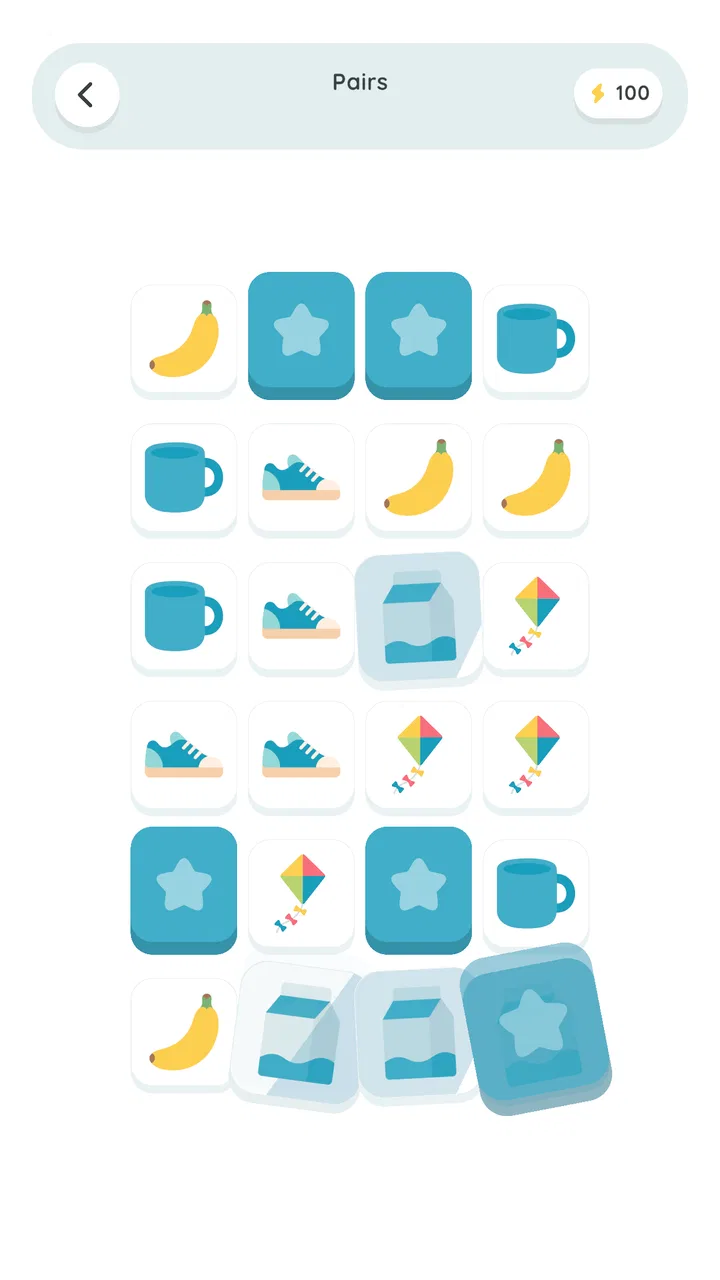
Minipuzzles Go! is a casual puzzle game designed for short, relaxing play sessions. It offers a collection of compact challenges that can be completed without a major time commitment, making it suitable for players who enjoy testing their logic, attention, and problem-solving skills. The simple format makes it approachable for beginners while still providing enough variety to remain entertaining.
02How do you play Minipuzzles Go!?
The game is based on solving small puzzle challenges by observing patterns, arranging elements, finding solutions, or completing other logic-based tasks, depending on the level. Controls are generally designed for touchscreens, so actions such as tapping, dragging, and selecting objects feel natural on Android and iOS devices. Each puzzle usually has a clear objective, although some solutions may require experimentation.
03Is Minipuzzles Go! suitable for children?
Minipuzzles Go! can be appropriate for children who enjoy simple logic and problem-solving games, especially because the short challenges are easier to understand than complex strategy titles. However, parents should review the game’s recommended age rating and any advertising or in-app purchase options before allowing younger children to play. Difficulty and content may vary between puzzles and updates.
04Does Minipuzzles Go! require an internet connection?
Some parts of Minipuzzles Go! may be playable offline, which is convenient when traveling or when a reliable connection is unavailable. Nevertheless, internet access can be required for features such as advertisements, cloud synchronization, updates, leaderboards, or optional online content. Because requirements can change with new versions, it is best to check the store listing and test the game after installation.
05Is Minipuzzles Go! free to download and does it include purchases?
Minipuzzles Go! may be available as a free download, but free access does not always mean that every feature is completely unrestricted. Depending on the version, the game can include advertisements, optional hints, extra puzzle packs, or other in-app purchases. Before downloading, users should review the official Google Play or App Store information to understand pricing, permissions, and available purchase options.
Pros
- Quick levels are ideal for short breaks or casual play.
- Simple controls make the game easy for most players to learn.
- The variety of puzzles helps prevent the gameplay from feeling repetitive.
- Progression provides a clear reason to keep completing new challenges.
- Works well for players who prefer relaxed
- low-pressure puzzle games.
Cons
- Some puzzles may feel too easy for experienced puzzle fans.
- Difficulty progression can be uneven between individual challenges.
- Repeated puzzle formats may become predictable over longer sessions.
- Hints or extra attempts may be limited
- depending on the game mode.
- Small screens can make certain puzzle details harder to examine.

Minipuzzles Go!
Gallery